
Older workers are here to stay
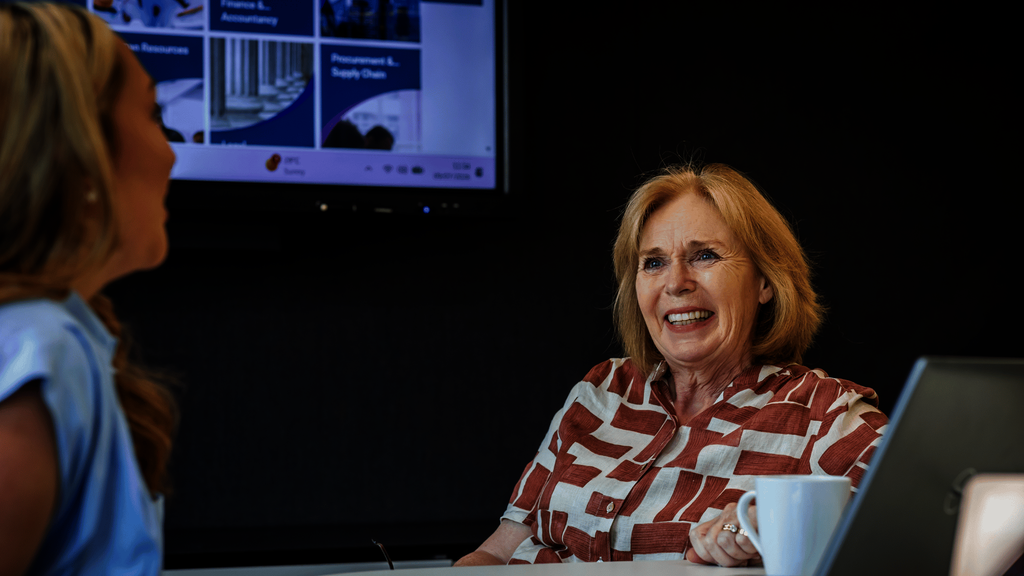
More than one in four workers in the UK are now in the 50-64 age group – a trend that is likely only to grow in the coming years.
Embracing age-friendly employer practices will give organisations the edge when it comes to adapting to the changing labour market, writes Tracy Riddell, Head of Age-friendly Employers at the Centre for Ageing Better.

Over the past 40 years, the number of people in the UK over the age of 50 has increased by almost 50% - the equivalent of 7 million people.
This population shift isn't an anomaly, it is part of a continuing trend. With birthrates at their lowest levels for 50 years, older workers will become a bigger and bigger section of the workforce in the future.
This is dovetailed with an increase in the state pension age, now standing at 67, meaning that people are having to stay in work longer.
Back in 1948 – the year that the NHS was established – life expectancy for a man was 66 and 71 for a woman. For both genders, much of the work was physically demanding, or sometimes dangerous, therefore prolonging working life into the 60s and 70s wasn’t a priority, or even a reality.
But today, the concept of the ‘cliff edge’ retirement has now become an outdated cliché, with many older people now choosing to stay on – or return to work – beyond retirement and taper off from work into retirement rather than coming to an abrupt stop.
Looking to address this inevitable demographic shift, to ensure that employers were prepared to maximise the potential of this older workforce, we launched the Age-friendly Employer Pledge.
The launch of the Pledge was in response to what was happening in the real world of work and the obstacles that often presents to older people.
Its core philosophy is about supporting people to remain in fulfilling work for longer has become an urgent priority. The Age-friendly Employer Pledge was developed to help employers improve the recruitment, retention and development of workers in their 50s and 60s.
Since its launch, it’s been signed by more than 600 organisations, who are all on their own journey towards becoming a more Age-friendly Employer.
We’re on our own journey too. During our (nearly) four years of delivery, we’ve been listening, learning, observing and evaluating. We’ve grown in our confidence about why the ‘case for support’ for Age-friendly Employers, is just as strong now – as it was four years ago.
And it's important that we keep being curious about the 'case for support' and being clear on 'why' we all need to play our part in creating (and sustaining) age-friendly workplaces. Whether we're driven by the business case for a more competitive edge or as a society, that proudly celebrates older workers, committed to people of all ages.
Demographic change
How well have our workplaces adapted to reflect that people over 50 now make up a third of the workforce and that this will continue to grow? How aware are employers of the specific issues that affect those of us in the latter stages of our working lives? How they can be taking positive actions towards Age-friendly employment?
In the four years of the Pledge, we have seen progress but we need to see more, as the launch of our recent NETER campaign makes abundantly clear.
Who got da skillz?
According to skills projections, the UK will need an additional 2.5 million workers between 2020 and 2035, with most of this demand concentrated in professional and technical occupations requiring higher-level skills. Given the ageing population and the tendency for workers to have accumulated skills across their working lives, a large section of these will need to be older workers.
Government analysis has indicated that roughly 70% of UK workers are in occupations that AI could potentially perform or enhance. This represents a higher figure than in other advanced economies. If more adaptable skills are required, meeting this workforce need will not be possible without the inclusion and retention of people aged 50 and over.
The jury is still out on the impact of AI for older workers.
There are serious concerns that AI can double down on existing prejudice in the recruitment process and so we need to be extremely careful this isn’t happening.
There also concerns that employers might be wrongly overlooking older applicants because they don’t believe they can adapt to changing AI-dominated workplace.
There is an assumption that AI will harm older workers disproportionately but they have already worked through technological shocks/revolutions in the past and have been able to adapt.
AI might remove more laborious tasks, requiring experienced and knowledgeable workers to best understand the results AI produces.
Productivity and future proofing
According to the OECD, employers with a higher share of older workers than the average see an increase in productivity. It is a business decision to grow a multigenerational workforce.
As the population ages, the profile of consumers will also change. A workforce that better reflects the age diversity of its customer base can improve customer satisfaction, engagement and sales by bringing a wider range of experiences, perspectives and insights into the workplace.
The case for support for Age-friendly Employment continues to be strong and we’re continuing to improve the Age-friendly Employer Pledge in response to this need. We are shortly to launch a new ‘members only’ online platform making it easier for employers to navigate the resources they can use to take action as well as new tools to support everyone can make better, more informed choices about their future.
And we’re committed to our principle of ‘continuous development’ as we continue to be your age-friendly workplace ally.