Ten years at the Centre for Ageing Better: from Intern to Outstanding Achievement Award
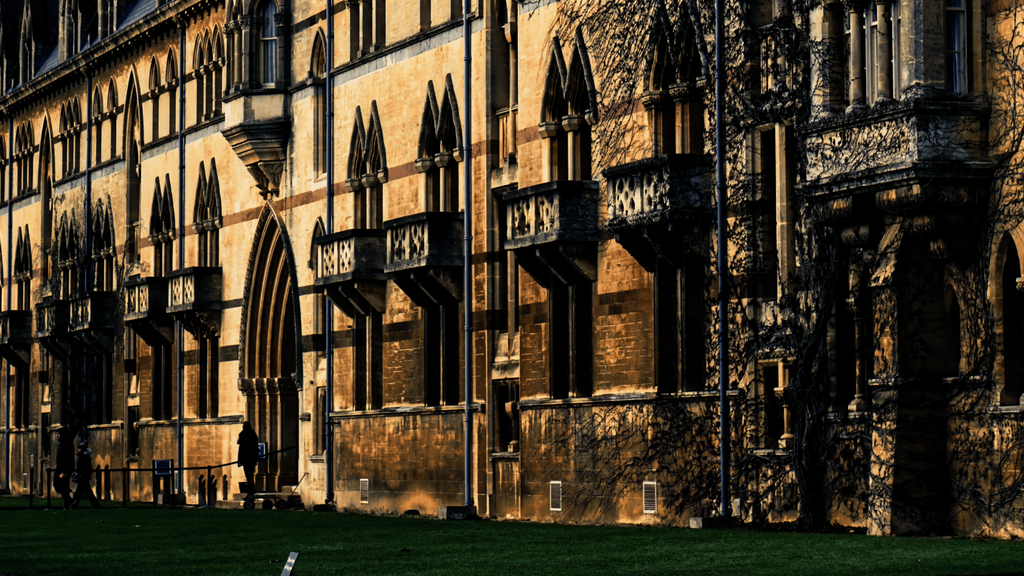
Aideen Young was recently awarded the prestigious Outstanding Achievement Award at the annual British Society of Gerontology Conference
Here she talks about her ten year journey with the Centre for Ageing Better which has led her to become a leading figure in age-based studies.
Little could I have imagined, when I completed my MSc in Ageing and Society at King’s College London in 2015, that a decade later I would be awarded the Outstanding Achievement Award from the British Society of Gerontology.
What extraordinary good luck it was that the Centre for Ageing Better was just getting started as the UK’s What Works Centre for Ageing as I finished my MSc. With no prior experience in the think tank/policy space I started as an intern (and all thanks to the wonderful Catherine Foot for taking a chance on me) and since then I have progressed through roles as Evidence Officer, Evidence Manager, Senior Evidence Manager and now Head of Research and Analysis.
While the award may have my name on it, what it really represents is ten years spent alongside brilliant colleagues as well as many other collaborators who contributed to our work, including other researchers, policymakers, practitioners and of course older people themselves, all working towards the same goal of improving later life and reducing the stark inequalities that shape how we age.
Finding my place in ageing
Following an earlier period as a protein crystallographer and before joining Ageing Better, I spent many years working in medical communications, focusing on conditions often associated with later life, including Alzheimer's disease and Parkinson's disease. It was the ubiquitous term caregiver burden that first piqued my interest – a seemingly innocuous term at first glance that describes the physical, emotional and financial strain experienced by those caring for older relatives. But with lots of older relatives at home in Ireland being cared for with love and grace and laughter, I realised that the term revealed something deeper about how society understands health, illness and ageing.
So a change was in order and the Ageing and Society Masters programme at King's College London fit the bill. And what a feast of learning that was - social determinants of health; medicalisation of old age, political economy of ageing, statistical analysis of the English Longitudinal Study of Ageing and so much more (shout outs to the inspiring academics on that course including Karen Glaser, Debbie Price and Laurie Corna).
Building an evidence base for change
And so to Ageing Better where all this learning has been put to good use. Over the years, I have worked across almost every area of the organisation's work. Some of the projects that remain particularly memorable include:
- The benefits of making a contribution to your community in later life
- Supporting older workers with health conditions
- Supporting carers back into work
- The barriers and enablers of active travel in mid-life
- The experience of the transition to retirement and work to develop the mid-life MOT
- The development of evidence on the harms of ageism and its impact on individuals and society
- Evaluation of the Age Without Limits campaign and its efforts to shift attitudes towards ageing and older age.
And let’s not forget State of Ageing, which is now approaching its sixth edition and has become one of the organisation's flagship products. What makes me most proud is not just that the report is widely used and cited, but that it has also spurred local areas to develop their own local reports to understand their own ageing populations. And that’s important because we know that national statistics mask substantial differences in the experiences, needs and resources of older people at the local level.
Besides the sheer variety of the subject matter I get to work on – after all, ageing is about absolutely everything – there’s the variety of things I get to do on a daily basis that’s made working at Ageing Better so enjoyable. There’s data to analyse of course, and charts, reports, blogs and infographics to produce. But I also get to go out into communities and talk to older people about aspects of their lives as we did in Middlesbrough and Knowsley for State of Ageing 2025, and to our experts by experience for their insights on the work we’re doing.
I get to sit on advisory boards, give presentations, give evidence to enquiries, do media interviews. A recent highlight was being asked to contribute to the Wellcome collection The Coming of Age exhibition and participating in their accompanying symposium. And underpinning everything we do are the questions “what’s the problem we’re trying to solve?”; “what are our key messages?”; “who are we seeking to influence?” because the point of it all is to achieve real change in the world.
Looking ahead
A final point has to be that my experience completely upends any ageist notions about one’s ability to learn and adapt whatever age you are. I completely changed direction in my 50s and have had a rich, full and rewarding career since. It is possible to do this and it’s vital that more people get the opportunity to do this.
Receiving the British Society of Gerontology's Outstanding Achievement Award has certainly prompted me to reflect on the journey so far, but it has also made me think about what comes next. The challenges facing an ageing population have not disappeared and if anything have become more pressing. Persistent inequalities, inadequate housing, ageism, gaps in data, pressures on health and care systems and wider social and economic change all affect how we experience later life. There’s much to do. So here's to the next ten years!
Photo of Oxford by Peter Morch.