How local authorities can help businesses connect with their largest untapped market
Older consumers continue to be overlooked by many businesses despite the fast-growing demographic’s substantial spending power
Our Learning Officer Pippa Mannerings details the role local authorities can play in convincing businesses they will benefit from taking a more age-friendly approach.
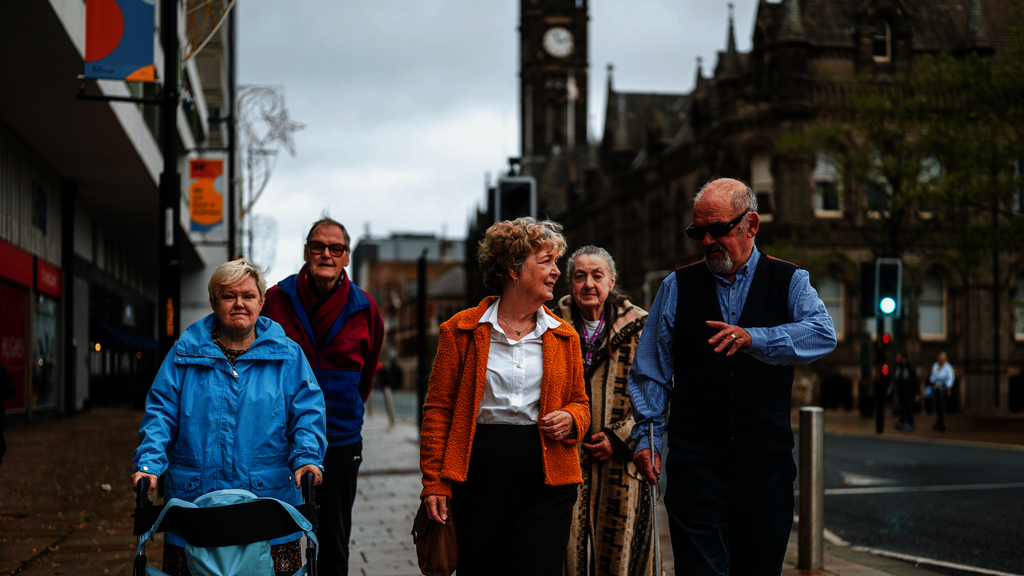
Across the UK, local businesses are overlooking one of their most significant and growing customer groups: older people.
With people aged 50 and above accounting for more than half of the consumer spending in the UK, and set to make up almost half of the UK population within the next 40 years, older consumers are a huge, but often overlooked, market for businesses.
Local shops and high streets are often the heart of our communities; shaping our social connections and our sense of place. Unfortunately, many high streets are in decline and are looking for ways to bring people back. At the same time, many older people currently struggle to access spaces such as shops and cafes which are not accessible or welcoming.
As the country’s population ages, there is a significant opportunity for Age‑friendly Communities across the UK to engage with these spaces – working with local businesses to create environments that are more accessible, welcoming and inclusive for customers of all ages.
However, engaging businesses with this agenda is not always straightforward. Many are operating under significant pressure, with immediate concerns such as crime, anti‑social behaviour, rising costs and low footfall taking priority.
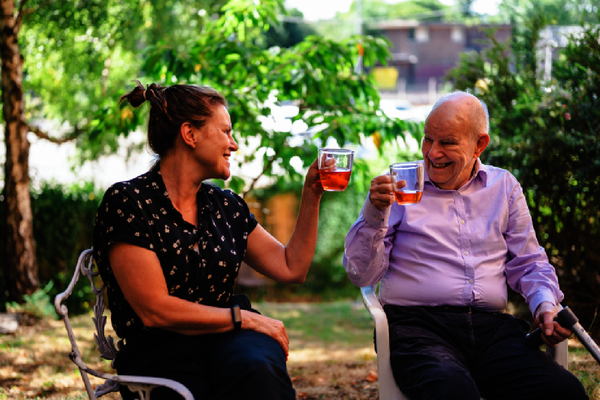
In this context, initiatives such as age‑friendly improvements or campaigns like Take a Seat, where businesses offer up a chair and a friendly welcome to anyone who might need it, - can sometimes be seen by businesses as “nice to have” rather than essential.
Over the past year, the Centre for Ageing Better has been working in partnership with Bournemouth Town Centre BID and Bournemouth, Christchurch and Poole Council in supporting local businesses to be more age-friendly and inclusive to older residents and visitors. The project has shown that age-friendly initiatives can be supportive to businesses rather than add to their workload.
The work has focused on practical ways that businesses can strengthen their offer to a wider range of customers. This has included launching a Take a Seat initiative, offering age-friendly training to local businesses, and raising awareness of age-friendly features and opportunities in local businesses in Bournemouth.
Building a strong, local business case was key to encouraging businesses in Bournemouth to engage with age-friendly work. Positioning this not only as “the right thing to do” but also as a clear commercial opportunity proved particularly effective.
In the Bournemouth, Christchurch and Poole area, more than four in ten of the population is aged 50+, a figure set to rise by a further 10% in the next five years. This represents a significant and growing customer base that is often overlooked by businesses.
Failing to connect with this age group can be costly to businesses. Evidence shows that older customers tend to have consistent spending power, value reliability, are more likely to remain loyal to brands and services they trust and also favour local businesses.
Framing age-friendly action in this way helped businesses recognise that small changes could unlock long-term customer loyalty. When businesses see both the social impact and the clear business benefit, engagement becomes much easier.
So, for local authorities looking to encourage businesses in their area to better cater for older consumers, what does a strong local business case look like in practice? Here are four key tips:
1. Start with how your local population is ageing – and what that means for demand
National data shows a clear disconnect between the value of older consumers to businesses and how businesses value older consumers.
Although people aged 65+ account for around one fifth of UK spending in the hospitality and leisure sector (totalling an estimated £37 billion), only one in 20 of businesses in the sector see them as their most important customer group – often focusing instead on younger demographics such as 35–44-year-olds. This gap highlights a significant, and often overlooked, market opportunity.
Local authorities can use this insight as a starting point with businesses, and then should ground it within the local context. Understanding your local population – and combining this with local data and tools like the Centre for Ageing Better’s Age-friendly Business Framework will help local authorities to build a compelling, evidence-led case. At its core, a strong business case begins with a clear picture of the local context and the untapped potential within it.
2. Keep it simple, clear, and easy to act on
Busy businesses are far more likely to engage with initiatives that are straightforward, practical, and require minimal time or decision-making. Too many options or overly complex offers can lead to “decision paralysis,” where nothing gets implemented at all.
The success of the Take a Seat initiative with Bournemouth BID levy payers demonstrates this well. By providing the key elements such as the chair itself and supporting materials, businesses were given a ready-made solution that was both easy to understand and simple to put into practice. One business reflected:
"We found the chair to be used more so by-passing older people than regular older customers. This actually was great to see as it aligns with the support the chair aims to bring whilst also bringing in new customers."
Offering clear, tangible actions with minimal choices reduces barriers to participation and makes it much easier for businesses to get involved. In practice, the more simple and straightforward the ask, the more likely businesses are to say yes and follow through.
3. Work with the right partners
Collaborate with organisations, such as the local Business Improvement District (BID) or the Chamber of Commerce, that already have relationships, credibility, and reach with local businesses.
In Bournemouth, working through the BID helped ensure the message was trusted, relevant, and reached businesses in a way that would not have been possible otherwise.
4. Take the long view
Building engagement with businesses rarely happens overnight. Relationships, trust, and visibility, take time – particularly when businesses are under pressure. In Bournemouth, progress came from consistent engagement, celebrating small wins, and building momentum over time.
Businesses cannot continue to overlook and undervalue the growing ageing population as consumers.
By building a strong, localised business case and focusing on practical, achievable actions, local authorities and Age-friendly Communities can work with businesses to make age-friendly changes that are both good for business and good for the community.
This article first appeared in the Municipal Journal.