
The new Class Unit is an opportunity to improve evidence and policymaking for older people
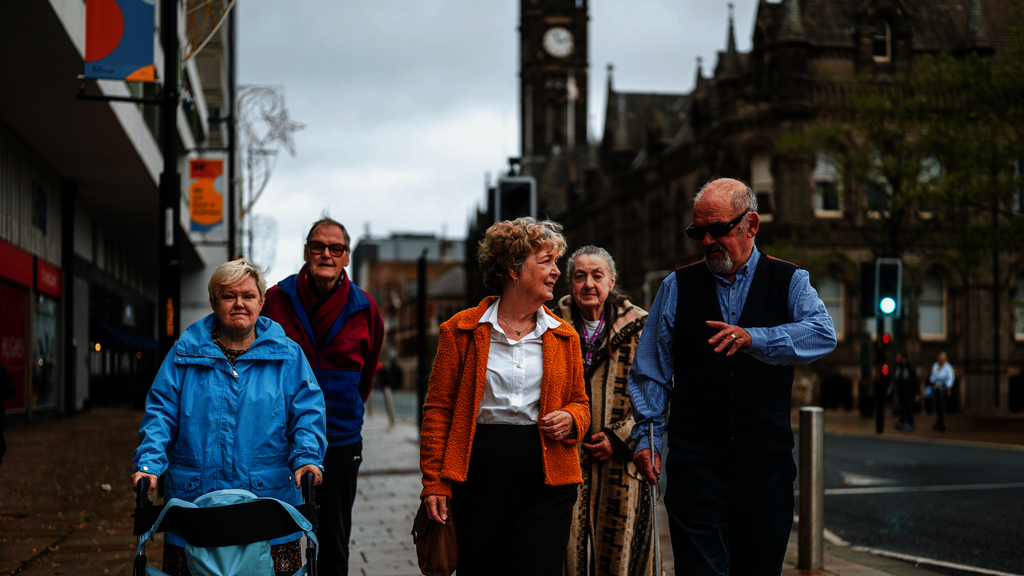
A new ‘Class Unit’ within the Office for Equality and Opportunity will focus on addressing entrenched inequalities and inter-generational challenges.
4 min read
Our Ageism and Inequality team members Sarah Wilkinson, Tom Goodridge and Caitlin Rollison discuss why this is a welcome announcement for our ageing population and three key considerations for the new unit.
Minister for Women and Equalities Bridget Phillipson has announced the creation of a new ‘Class Unit’ within the Office for Equality and Opportunity (OEO). The new unit will replace the Social Mobility Commission and will sit alongside existing Disability, Race Equality and Women and Equalities Units.
Among its duties, the unit will be responsible for introducing a new legal duty for public bodies in England to consider how their policies in areas such as education, health, and housing, affect those on low incomes.
Inequalities in later life are driven by disadvantage accumulated across the lifetime, as recent episodes of 70 Up have illustrated so powerfully. If the Class Unit can improve our understanding of socioeconomic disadvantage across the life course and learn from the work and expertise of the other units within the OEO and external organisations, it could make a significant contribution to improving the lives of older people.
Here are three things the Class Unit will need to consider across its work to help it understand and support effective policymaking for both today’s older people and future generations.
1. Consider how to define and measure ‘class’ in older people
One of the roles of the Class Unit will be to act as a centre for government analysis of class and socioeconomic inequalities. Defining and measuring class and disadvantage is complex, and it is important not to conflate working class with disadvantage.
Measuring class and socioeconomic inequality is particularly complex for older people. Many of the standard ways of measuring class that are used for younger people do not translate well for older cohorts, and proxies for class and disadvantage change over time.
Measures such as educational attainment or home ownership do not currently show enough variation in older populations to be useful. Another traditional measure is occupation, which for older people is more gendered with fewer women working, and can miss changes in occupation over time. Parental and childhood information is often used as a measure for younger people but becomes less relevant as people age due to social mobility. And financial measures are difficult to collect and interpret, particularly as the situation of the wider household and family may have an influence in later life. For people older than state pension age, receipt of Pension Credit could be an indicator – but this is woefully underclaimed, especially by single women. Place-based measures, such as the Index of Multiple Deprivation or Income Deprivation Affecting Older People Index (IDAOPI) may be more useful for looking at inequities at a population level, but the complexity of assessing the socioeconomic class of older people needs careful consideration.
We know that class does matter. Physical and mental health outcomes in later life are strongly linked to socioeconomic factors, and that socioeconomic factors in early life continue to have an influence much later in life. The Class Unit will not be able to act on inequalities in today’s older people, or design policies which address inequalities across the life course, without getting to grips with the complexities of measuring class in older people.
2. Investigate how class interacts with other inequalities
Class doesn’t exist in a vacuum. To have the greatest impact on reducing entrenched inequalities, the Class Unit must recognise that class interacts with and is shaped by other aspects of our identity and social position.
Class does influence the material conditions of our lives, from income and education to employment and housing. But these experiences do not look the same for everyone. Race, gender, and other aspects of identity intersect with class to shape the opportunities available to us and the barriers we may face.
Take, for example, a low-income British Asian woman. Her experiences in education, employment, and healthcare may be very different from those of a middle-class British Asian woman or a low-income white woman. All three may experience inequalities and challenges linked to their circumstances, but the ways in which class, race, and gender intersect can produce very different social experiences.
The Class Unit must not treat class as a standalone category or issue. To develop policy interventions which reflect and address people’s experiences of inequality, it will need to recognise how class interacts with other dimensions of identity.
3. Translate evidence to action
An improved understanding of class, socioeconomic inequalities, and how these intersect with other inequalities will not help improve people’s lives unless the Class Unit can translate evidence and analysis into action.
The Class Unit’s place within the Office for Equality and Opportunity means this action will primarily occur through national equalities legislation and work with other government departments. Bridget Phillipson has already announced that commencing the socio-economic duty in the Equality Act will be a priority for the unit, a welcome commitment to taking action from the outset.
In the longer term, a big test of the Class Unit’s ability to act on inequality will be how much it can embed its learnings and priorities into other government programmes and priorities.
For ageing and older people, where cross-government strategy and consistency are lacking, this is a huge opportunity.
The Class Unit could improve understanding of how older people experience inequality across government and help ensure policies in key areas such as housing, health and employment work for our ageing population.
Its success should be measured not simply by whether people have opportunities early in life, but by whether those opportunities translate into decent health, financial securiay, good housing and meaningful participation throughout their lives and into older age. Only by looking across the whole life course can we truly break the link between socioeconomic background and life outcomes.