The Age Without Limits campaign is highlighting the harmful nature of ageism across all aspects of society and the need for everyone to question and challenge age-based prejudice wherever they come across it.
Dr Carole Easton OBE, Chief Executive at the Centre for Ageing Better, said:
“In the latest phase of our campaign, we are highlighting the absurdity of ageism. It is a prejudice against our future selves, as we all hope to get older one day. It is in no one’s interests to impose limits and barriers on what we can do as we get older. Our survey shows it can also be a prejudice against our current self, with people in their 50s, 60s and beyond assigning themselves age limits to what can and can’t be done in later life – something known as ‘internalised ageism’.
“Our polling shows how all-encompassing ageism can be with societal judgements around what we can wear, our working lives and how people’s capabilities are perceived based purely on age judgements. Ageism limits work, health, relationships, ambition and confidence—and ultimately whose lives are seen as worth investing in. Ridding society of ageism would have such a transformative impact on so many lives.”
Age Without Limits campaign supporter Danielle Barbereau said:
“In my early 50s I experienced significant ageism in my career to such an extent that I was completely frozen out and found it impossible to find a new job. I was left feeling obsolete, desperate to keep providing for my family and scared about what the future would have in store.
“I was forced to take my own initiative to start a new career which I am still thriving in now and have no intention to stop doing anytime soon. It is terrible so many people are written off in their 50s but I’m glad I was able to show how absurd it is for some people to think that at my age I had nothing more to offer in the workplace.”
The new polling also highlights ageist attitudes towards people’s abilities to use technology and the quality of their brain function as they get older revealing that:
- new technology is 61 –
- – Other studies have shown the overall functioning of the human brain reaches its peak between 55 and 60.
- The average age that someone is considered old is 65 – the average age when old age is thought to begin varies as well as being dependent on the age of the person being asked the question () showing how much old age is a personal and social construct.
The polling also reveals some interesting differences in the likelihood of ageist attitudes between different including:
- The age group most likely to think that someone stops being seen as a desirable candidate for employers to hire at the age of 50 or younger was the 45 to 54 age group (41%) – a possible reflection of the ageism this group experiences themselves in the workplace.
- Almost twice the proportion of 45-54-year-olds (23%) thinks cognitive decline starts at 50 or younger compared to the 55-64-year-old age group (13%) – a possible indicator that such fears about cognitive decline are not realised in the older age group.
- Nearly one in five (18%) of the population thinks people struggle to adapt to new technology at 50 or younger but this rises to almost one in three (32%) of 18-24-year-olds.
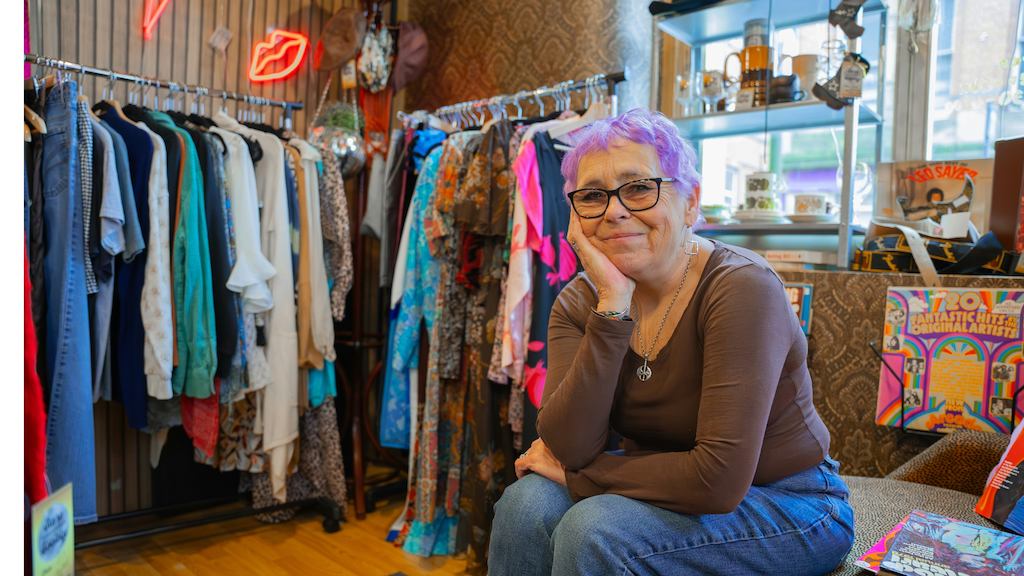
Age Without Limits campaign supporter Mindy Meleyal said:
“I think it is a failure of imagination to think there is an upper limit to being stylish, fashionable or individual. One of the many benefits of growing older is the confidence to care less about the opinions of others and unapologetic indifference is intrinsically stylish.”
Harriet Bailiss, Co-head of the Age Without Limits Campaign, said:
“Getting older has its challenges. Being treated negatively because of your age should never be one of them. Ageism is widespread, and it has the capacity to harm any one of us and those closest to us. That is why we all need to question and challenge it with small, everyday actions to deliver a big, society-changing transformation. The power resides within us all to help push back against ageism to make life better for others and ourselves.
“Our campaign is calling on everyone to question ageist language, stereotypes and behaviours that they experience in daily life and to challenge the flawed thinking that they are founded upon. Every small act of questioning and challenging will contribute to a shift in the culture around ageing and help to create a world where everyone can age without limits.”