
Steps to Your Goal initiative
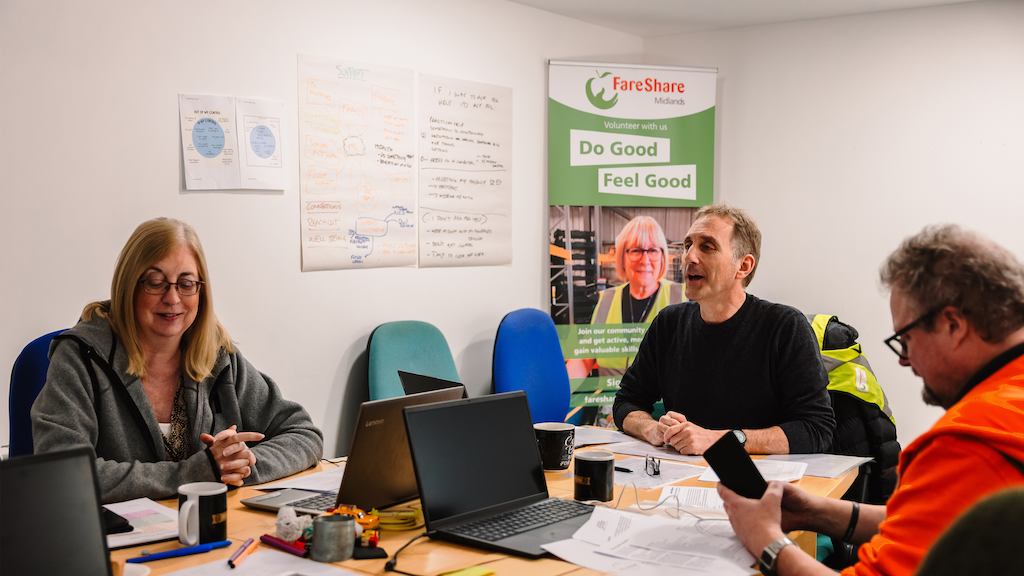
Developed by the Centre for Ageing Better and Triage Impact (Middlesbrough) this pilot employment support project was aimed at people in their 50s and 60s.
Working in partnership
In 2024, the Centre for Ageing Better was approached by Triage to gauge interest in collaborating on an employment support initiative based in the north-east of England. Triage has a history of working with local, regional and national partners, and the Steps to Your Goal pilot project built on the idea of a person-centred, holistic approach to employment support for people aged over 50.
It incorporated recommendations based on previous research carried out by Ageing Better and afforded the opportunity for these strategies to be tested and evaluated. A third partner AKG Health, with a long track-record of collaboration with other organisations, was brought on board to provide expertise in health and wellbeing support. The project ran from June 2024 until January 2025, working with a total of 50 participants across two cohorts.
The holistic approach to support
Referrals were invited from Jobcentre Plus (JCP), and it was noted that Triage’s positive working relationship with local JCPs enabled smooth transition onto the programme. Participants were also referred from other programmes delivered by Triage, with Facebook accounting for a small proportion of self-referrals. The programme of support began with an in-depth meeting between the participant and the employment specialist, Kerry. This allowed time to form an understanding of what the participant hoped to achieve, as well as ensuring they knew what their commitment was. The programme ran for a period of 12 weeks.
Having trialled fortnightly face-to-face meetings in Phase 1 of the pilot, this changed to weekly sessions with the second cohort, allowing Kerry more time to understand the varying needs of the participants, consolidating the rapport between them, and maximising the potential for effective support. Analysis indicated that having one consistent employment specialist was key to success, encouraging a relationship of trust and reducing the need for participants to share their situation with multiple people.
Other important aspects of Steps to Your Goal, were the voluntary nature of the programme, and the ‘life journey approach’ which took account of personal experience, preferences and aspirations, leading to sustainable employment.
Participants were supported to find a job of their choosing, not just any job. Whilst for some the urgency to secure work and have a wage coming in again was paramount, other participants felt the opportunity to reflect on their skills and experience, to access relevant training courses and revise their goals, was crucial to their motivation in finding work.
Within the 12-week programme, participants were offered the opportunity to access additional support from AKG Health in the form of tailored health-focused sessions conducted by telephone. There were two health coaches with specialism in either mental wellbeing or physical health concerns. This meant that participants could be assigned according to their primary need. Offered as an optional supplement, AKG Health’s support was taken up by 71% of participants, although across the two cohorts 82% reported long-term health conditions or disability.
The health coaches worked flexibly with participants, taking the lead from them regarding regularity of contact, with a maximum of six hours of support offered. Both coaches took a holistic approach to health needs, looking beyond the immediate concern or condition, and taking account of the broader context such as lifestyle, managing symptoms, the impact of work/volunteering, finance and social interactions.
Weekly communication between Kerry and the team at AKG Health further strengthened the collaborative, holistic approach to support. They were able to discuss any issues or developments to maintain a co-ordinated approach.
As Kerry explained: “Working with AKG Health has really worked because there’s a lot of people for whom life is difficult, it’s hard - but for them to access this service... having that next to us has really helped.” The united approach benefitted participants, as the team was able to co-ordinate throughout the pilot, with Triage sharing their knowledge of local health and wellbeing services for referral, when needed.
Participant experience
There was a range of people who joined the programme, some having worked solely within a single industry. Facing unemployment in their 50s or 60s through ill-health or redundancy had a huge impact on every aspect of their life. Many participants came with complex support needs, some long-term unemployed, some with significant health issues or family circumstances which added barriers to finding work. Although the aim of the programme was to remove barriers to employment, securing a job was not necessarily the goal for all participants; for some, moving closer to being ready for employment was the target.
Support therefore had to be tailored specifically to the needs of each individual. For some, introducing current job-search tools online was invaluable for developing confidence and know-how to explore employment possibilities. For others, digital literacy or digital access were a barrier that needed to be addressed to be able to make progress. Individual support and formal training courses were available for those who needed and could benefit from them.
Coaches took a practical approach in supporting participants. Kerry spent time with each person, identifying transferable skills and reviewing CVs to reflect the broader range of skills that they had, whilst in some cases the health coaches contacted health services on behalf of the participant, in order to hasten progress. In terms of job searching, pre-interview preparation was available, for example a mock interview followed by an evaluation to discuss how it went and reflect on what could be improved. Although not part of the pilot team, Triage does have its own employer engagement support team.
Kerry’s relationship with colleagues on the team also allowed for some participants to access interviews which came through this network, rather than simply searching online. Looking at positive ‘hard’ outcomes, 20% of participants gained employment by the end of their 12-week programme; another 6% were receiving support to start their own business, and a further 46% had taken part in one or more relevant training course. However, the pilot went beyond simply moving people closer to, or into employment. Improved confidence, self-worth and motivation were reported by many participants, with additional improvements to lifestyle, and management of symptoms for those with health concerns.
Learning for the future
The pilot evaluation report identified four essential characteristics that contributed to the success of the project:
- Effective referrals to a voluntary support programme
- Length of time spent with the participants
- Consistent, skilled staff members
- Individualised, holistic support
Participants were motivated to attend, benefitting from the consistency of employment and health coaches. With sufficient time allocated to engage in meaningful discussions, effective relationships were built alongside practical action plans. These were led by the participant with guidance from the professionals, thus empowering participants to regain confidence, and control of their future.
An important aspect which impacted positively on participants’ experience, was entering a safe space with a positive environment and a friendly welcome.
This cannot be underestimated in terms of building self-esteem and motivation to move forward. Similarly, Kerry’s decision to defer the main bulk of the on-boarding questionnaire, and instead to simply listen to the person in front of her, meant that participants were able to speak more freely, explaining the broader context that was important when developing an Individual Action Plan.
In short, people felt safe in their surroundings to be able to open up and accept the support that was available. The coaches at both Triage and AKG Health were able to identify several areas of enhancement which they actioned during the pilot, emphasising the need to be flexible in the approach to effective support.
In addition, a number of recommendations for further improvement to the programme are explored in the full evaluation report. Here too, the response of participants highlights the personal qualities of frontline staff that are key to building effective relationships: empathy, warmth, understanding, knowledge and a non-judgmental attitude. It is perhaps worth reflecting quite simply on how relationships can be nurtured successfully within a professional framework. Listening and understanding the whole context is fundamental and needs adequate time to process in order to build mutual trust. Those basic interpersonal skills are the foundation of effective support upon which signposting, referral to other services and practical interventions can be built.