International Women’s Day 2026: Why Healthy Ageing is a Feminist Issue
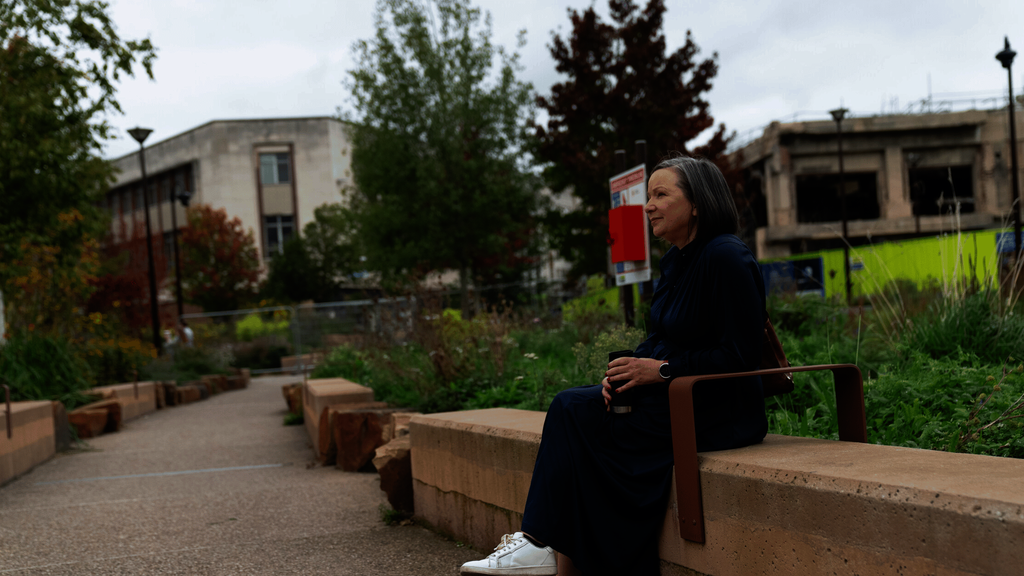
New official figures show that women’s healthy life expectancy has hit an all-time low with women now spending a smaller proportion of their life in good health than men.
To mark International Women’s Day, Dr Aideen Young, our Senior Evidence Manager for Research, Impact and Voice, explores the inequalities women face as they get older in this country and the impact that has on their lives.
“The personal is political” has been a touchstone of feminist thinking for more than half a century. Carol Hanisch’s 1970 essay argued that the pressures and expectations placed on women including domestic labour, caring roles and scrutiny of their bodies, are the product of wider systems of power. With International Women’s Day returning this Sunday, it’s worth asking what this means for older women in England today.
Among those of us who are involved in the study of ageing and the ageing population, we talk a lot about a life-course conceptualisation of ageing in which the effects of the social, economic and cultural conditions that shape our lives accumulate across the life course and show up powerfully in later life. Feminist gerontology allows us to view the ageing of women across the life course through the lens of feminist theory, focusing on how gender, power and social structures shape their experience of growing older.
It recognises that women face distinct forms of discrimination and invisibility, giving rise to profound inequalities. In short, gendered structures mean that women and men do not age equally and do not arrive in later life on equal terms.
One of the clearest examples is unpaid care. There are almost 3 million unpaid carers aged 50 and over in England caring for someone with conditions related to old age and the majority of them (almost three in five) are women. They are more likely to provide care at every intensity level, including at the highest levels of support.
Caring responsibilities of all types are a major factor in women leaving the workforce: for example, women aged 45 to 60 are seven times more likely than men to have left or considered leaving work early to care for children or grandchildren. This has long-term consequences for financial security. It can contribute to interrupted job histories, affecting income and pension contributions.
Women in their 50s experience the largest gender pay gap of any age group, earning just 84% of men’s weekly pay. Four in five workers who do not qualify for automatic pension enrolment are women, so women are far more likely than men to be under-pensioned, i.e. have lower than average levels of pension savings and income. Single women are three times more likely than single men to miss out on Pension Credit they are entitled to. And single female pensioners are the most likely to have low or no savings, with more than one in five women over 65 having less than £100 left each month after paying rent.
And all this has an impact on women’s health. In newly released figures, women’s healthy life expectancy at birth – an estimate of the average number of years babies born in a specific year would live in a state of ‘good’ general health – has fallen to its lowest level (61.3 years) since this data was first calculated in 2011-13. Although this is longer than that of men, the life expectancy of women is also longer with the result that women spend a smaller proportion of their lives in good health – 74% vs 77%. Moreover, women’s healthy life expectancy has declined by 29 months in the last three years, compared with 22 months for men.
And then we come to how women are perceived as they grow older. Feminist gerontology sees ageism as a gendered form of discrimination because ageism and sexism reinforce one another. This perspective reframes ageism as a structural system of power that shapes how older women are seen, valued and treated. Data we have collected for the Age Without Limits campaign support this: women are more likely than men to have experienced ageism and are more anxious about their own ageing.
Women aged 30 to 50 are twice as likely as men to worry they will not look good when they are older, and women over 50 are more likely to worry about losing mobility.
While men tend to hold more ageist attitudes towards older people in general, women are more likely to fear becoming “old” themselves. This is hardly unsurprising in a society where women’s appearance remains central to their value.
And the experience of ageism also has an impact on health outcomes – whether because older people are less likely to be referred for treatment than younger people, or through self-ageism that prevents people from taking actions beneficial to their health, such as exercise or going for screening, because they themselves think they’re too old. Ageism, like other forms of discrimination, may affect health outcomes by inducing chronic stress responses such as increased inflammation that can cause severe, long-term physiological harm.
Clearly, healthy ageing is a feminist issue because gendered inequalities accumulate over time. Improving later life for women requires a feminist lens to address the unequal distribution of unpaid care, the gender pay and pension gaps, age discrimination in work and cultural ageism.
But while these issues apply to all women, third-wave feminism goes further, emphasising the intersectionality of gender and race, class, sexuality, disability, migration history and economic precarity, so that different groups of women have very different ageing trajectories. For example, the proportion of Bangladeshi women aged 50 to 64 who report being in poor health (22%), is the same as for White British aged 85 and older – a difference of 35 years.
International Women’s Day is a reminder that gender equality must extend across the life course for all women. Older women deserve visibility, security, dignity and the opportunity to age in good health. Achieving that demands a commitment to valuing all women at every age.