Maureen and Phillip’s story
How using local home improvement services allowed an older couple to remain close to their community and in Phillip’s home of 62 years.
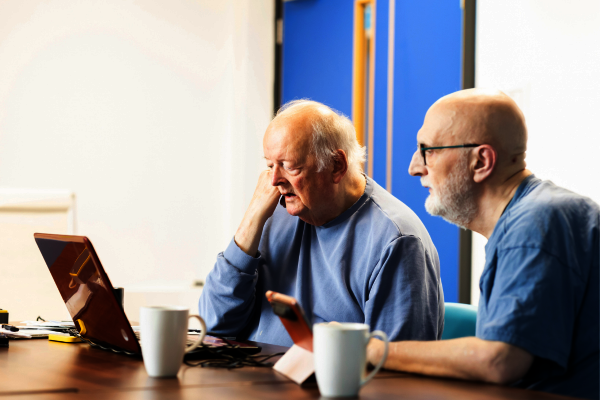
Maureen and Phillip are a 62- and 65-year-old couple that live together in rural Kent. They have lived together for the last four years in the home that Phillip has lived in since he was three. Following previous marriages, Maureen and Phillip got married in April 2022 and have built a full life together.
As they have gotten older, both Maureen and Phillip have suffered from poor health, supporting each other as their mobility has deteriorated. Phillip struggles with repetitive strain injury in his shoulder, as well as painful varicose veins, for which he had his veins stripped and wears support stockings daily.
Maureen has fibromyalgia and needs two sticks to walk. She also suffers from asthma, liver disease and is currently awaiting surgery for a Spigelian hernia. They both have osteoarthritis, leaving them grappling with painful joints and limited mobility.
Despite this, the couple maintain an active social life, organising a weekly walk and talk group for others with limited mobility who want a slow, accessible walk to remain fit.
Both Maureen and Phillip experience a lot of pain from their conditions and were struggling to manage it. Following an NHS pain management programme, which Maureen did, they started their own monthly chronic pain support group in their village, opening up their social life and connecting with others who are struggling with similar issues to them.
Due to their declining health, Phillip’s family home was becoming unsuitable for the couple. They were both having difficulties getting in and out of the shower, getting up from the toilet or the sofa, and getting in and out of the house or up and down the stairs.

At first, Maureen and Phillip were battling these issues without any support, eager to maintain their independence and go it alone. They didn’t want to seek help, believing that others were ‘worse off’ and they could handle it on their own.
However, following a difficult conversation with one another, Maureen and Phillip realised how much they were both struggling and decided to see what help they could find. They did not want to leave the home that Phillip has lived in for 62 years and the community they had built around them.
This is when Maureen and Phillip contacted their local council and Adult Social Services at Kent County Council sent an occupational therapist to assess their needs.
They were given options of who to choose for the adaptions, which is when they were put in touch with Town and Country Housing, a local not-for-profit housing association with a home improvement agency service.
Following this, they were able to make several life-changing adaptations with the use of a Disabled Facilities Grant (DFG) that have vastly improved the couple’s mental health and ability to move freely around their home.
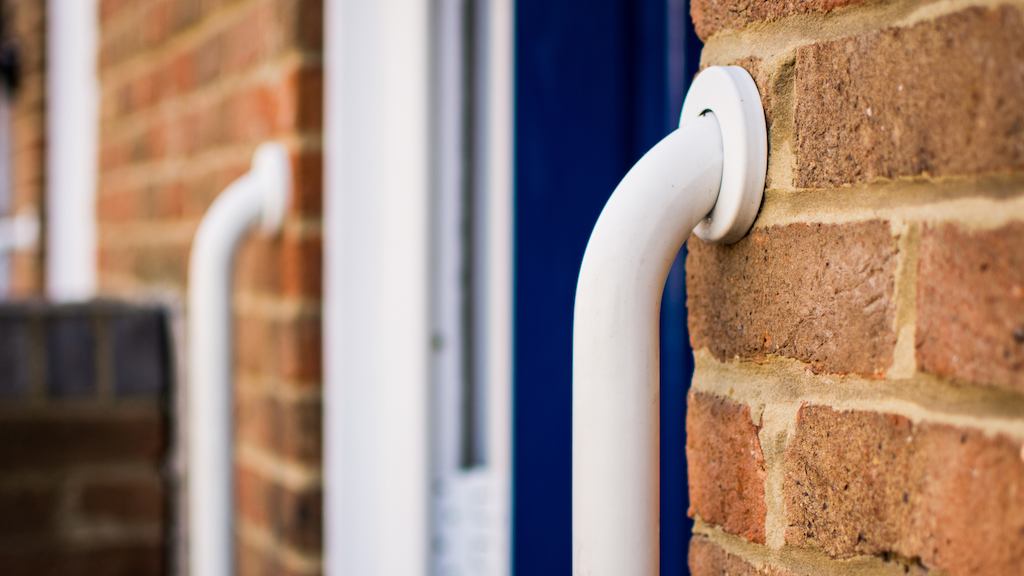
Town and Country Housing installed a wet room, meaning Maureen and Phillip were finally able to safely wash themselves and no longer had to help each other into the bath to use the shower. They also had two bannisters installed on the stairs, offering Maureen full support on both sides.
The couple both struggled with standing up and sitting down, so the council gave them a raised toilet and put blocks under the sofa, which has made getting up a less daunting task.
Maureen suffers from depression, and with the difficulties in their home, it meant that she really struggled to change out of her pyjamas each day and perform simple tasks, like showering. This was deeply impacted by her health issues and exacerbated by the inaccessibility of their home.
Whilst she still experiences depression, Maureen feels that the adaptations have made a world of difference. The wet room and banister have revolutionised her daily life, making showering enjoyable again, rather than a scary and dangerous task to be avoided wherever possible.
It's left me in a much more positive state.
The adaptations carried out through DFG funding have allowed Maureen and Phillip to remain safely in the home that Phillip has lived in for over 60 years, keeping them close to their community and in the home they love. And having been warned the adaptations could take up to two years, they ended up being completed in six months.
Maureen and Phillip struggle to heat their home. As they both suffer from arthritis, being cold is very difficult as it makes the pain much worse, so they both rely on electric blankets to stay warm, which they were provided with by their energy company. Their energy company has also provided them with a chimney block to prevent draughts and foil to go behind the radiator to reflect the heat.
Maureen and Phillip are eligible for the Limited Capability for Work-Related Activity element of Universal Credit because of their mobility issues. Phillip also receives a carers allowance for Maureen and Maureen gets Personal Independence Payments (PIP). For the last two years, they have also received the Warm Home Discount of £150 to help with the heating, yet still they do not have enough money coming in and worry about staying warm over winter.
They are part of a local volunteer pantry scheme where they pay £5 a week and receive £20 of food. Due to this scheme, they are less concerned about turning the heating on when it gets cold in winter.
We have enough food in the cupboard to keep us going, so we aren’t as worried about the cold.
Maureen and Phillip’s experiences demonstrate just how much of a difference access to home improvement services, funding for Disabled people and great support can make.
The adaptations that they have had are life changing, returning them to an independence and self-reliance that they feared they were losing.
People need easy access to information, support and trusted professionals when making changes to their home. We should all be able to keep warm in winter, stay in the homes we know and love, and remain close to our communities – regardless of our age and health.
We were always very independent and used to be working but had to stop due to health reasons. When you’ve been working and are very independent, you don’t want to ask for help, but sometimes you have to. Don’t be proud, if you need help you have to ask for it.
At the Centre for Ageing Better, we believe that the Disabled Facilities Grant has the potential to greatly improve people's circumstances, but it is currently too difficult a process to navigate. We need to see the process become less lengthy and complicated, with an increase to the maximum support available.
The Centre for Ageing Better also believes that it should be easier for people to find help with improving the quality or accessibility of their homes. That's why we are calling for the creation of a national network of Good Home Hubs, local one-stop shops for home improvement to give people access to these lifechanging services.