Takes the breath away: The poor health penalty from living in a damp home
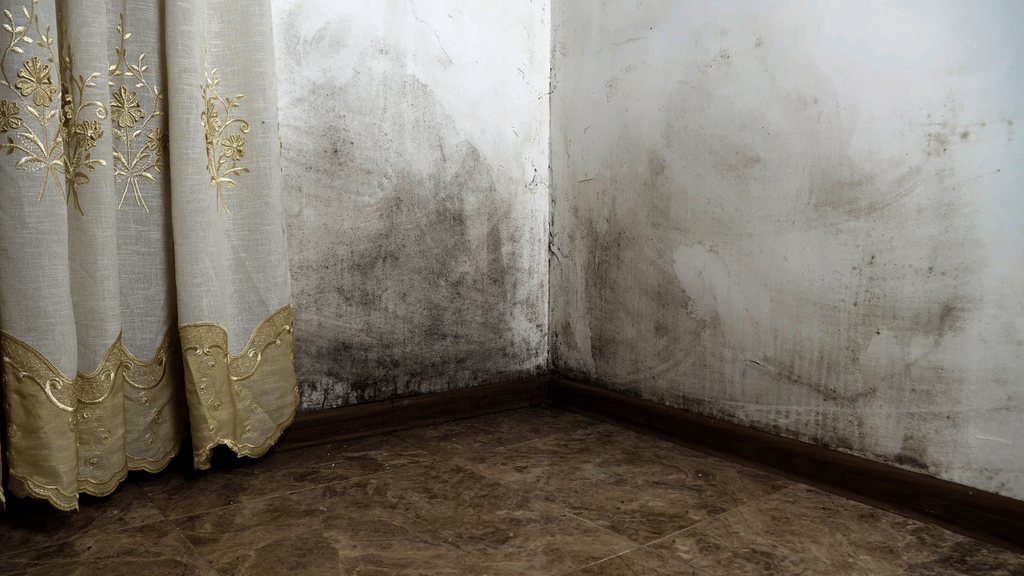
Our new Spotlight report, produced with the support of the Health Equals campaign, highlights the scale of the problem of condensation, damp, mould and cold amongst the nation’s poor-quality housing stock.
The report highlights the urgent need for the government’s upcoming Warm Homes Plan to target support to those most impacted by these issues including low income, older and Black households.
In more than two in five homes (42%) that have condensation, damp or mould, there is at least one person with asthma and/or a weakened immune system, a new report from the Centre for Ageing Better and supported by Health Equals reveals. This is almost double the proportion (22%) for households which have never had such issues.
The new Safe Homes Now report also suggests that the negative health impacts of living with condensation, damp or mould can stay with people after they have stopped being exposed to those conditions in their home.
More than one in three (37%) people whose current home does not have condensation, damp or mould, but who experienced these issues in the past, say that someone in their household has asthma or a weakened immune system.
Treating asthma costs the NHS £3 billion a year while two in three of the 1,000+ deaths from asthma in the UK every year is preventable.
The new report published today makes clear that households where people are in poor health or on low incomes are much more likely to have condensation, damp or mould and to suffer serious consequences to their physical and mental health as a result.
The Centre for Ageing Better, part of the Safe Homes Now coalition, says this makes the indisputable case for the government’s Warm Homes Plan to focus on the country’s poorest quality housing stock and those who need support the most.
Studies have shown that previous national energy efficiency schemes have disproportionately benefitted households with higher incomes.
The government is also being urged to bring forward the implementation date of the new Decent Homes Standard. Under current plans, the new Decent Homes Standard will not come into force for another ten years.
Millie Brown, Deputy Director for Homes at the Centre for Ageing Better, said:
No one should have to live in a cold, damp or mouldy home that damages their health and potentially poses a threat to their life. But the reality is that many people most at risk, especially those with health conditions and older people, are disproportionately living in poor quality homes that are making them more ill.
“Beyond the physical and mental health impact of our poor quality housing stock, the UK pays a heavy financial cost too. Low income people in particular are paying sky high energy prices beyond their means and still not feeling the benefit as the warmth seeps out of their poor quality homes like water through a sieve. The vast majority of older people cannot heat their home to a comfortable temperature. The NHS spends more than £1 billion a year treating people in England alone for conditions related to excess cold or damp in the home. Preventative home improvement measures could reduce this bill considerably.
“We need a national strategy to fix unsafe homes that sets clear cross-government targets for reducing the number of non-decent homes across all tenures and regions of the UK every year and we need an effective Warm Homes Plan that supports those who need help the most. To help achieve this, the government should establish a national network of Good Home Hubs to provide a one-stop shop for trusted home improvement information and advice for people from all housing tenures and with different levels of ability to pay.”
Paul McDonald, Chief Campaigns Officer at Health Equals, said:
This report lays bare a health crisis hidden inside people’s homes. Millions are living with issues like damp, cold or mould; conditions proven to damage health and worsen chronic illnesses like asthma and heart disease.
“A warm, dry, and healthy home isn’t a luxury, it’s a basic human right and is one of the building blocks of good health. But these building blocks don’t stack up for everyone. That’s why we need to see a cross-government health inequalities strategy that prioritises prevention, sets ambitious targets and makes better health a shared goal for every part of government.”
The new report shows that condensation, damp and mould can be an issue for households in all income levels but unsurprisingly, the greatest impact is felt amongst lower income households.
Comparing the experiences of people from households with an annual income of £15,000 or less with households of £75,000 or more, the research found that:
- One in four people from low income households (25%) cannot comfortably heat their living rooms in cold weather compared to around one in 20 (6%) among high income homes.
- More than one in five people (21%) from low income households live in homes with condensation, damp or mould compared to around one in eight people (12%) in high income households.
- More than one in three people (35%) from low income households whose home has had problems with condensation, cold, damp or mould, report that a household member has experienced stress, anxiety or depression as a result. In comparison, it’s one in five (19%) for high income households.
People from minoritised ethnic backgrounds are also disproportionately impacted by the country’s poor quality housing crisis.
When comparing the experiences of people from Black and White backgrounds, the new report reveals:
- Of Black respondents whose home has had problems with condensation, cold, damp or mould and someone in the household has experienced symptoms as a result, more than three in four (76%) report that medical treatment was required. In contrast, this was the case for fewer than three in five (59%) White respondents.
- Of Black respondents whose home has had problems with condensation, cold, damp or mould and someone in the household has experienced symptoms as a result, the proportion who report that it was their children who needed medical treatment (35%) is twice as high as for White respondents (17%).
- Of Black respondents whose home has had problems with condensation, cold, damp or mould and someone in the household has experienced symptoms as a result, the proportion who report that it was an older family member who needed medical treatment (16%) is almost twice as high as for White respondents (9%).
Our additional polling reveals the barriers people are facing trying to make improvements to their homes.
Among people whose homes need repairs, almost half (47%) say they are putting off having work done because of the cost. This rises to almost two in three (65%) among homeowners still paying off their mortgage.
One in ten said they had to take action at least once a month to tackle black mould or condensation in their home. This figure increased to more than one in five (22%) amongst people with Black, African, Caribbean or Black British backgrounds.
Among those putting off repair work, around two in five (39%) have seen the issue with their home deteriorate in the time they have delayed taking action.