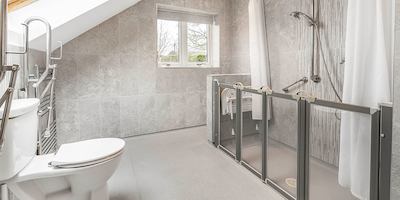
Home is where most people want to be in later life and 80% of homeowners aged 65 and over wish to stay where they are. Homes are important for health and wellbeing – home adaptations can delay a move into residential care by four years.
Julie and Peter's story - The journey for an accessible home
There is a market out there for accessible housing and the run of the mill estate agents are ignoring it. It’s difficult enough for people that need accessible housing anyway. Even new properties are not being built with accessibility in mind. And it’s a crying shame.
If we transform housing, we can also transform the quality of life for those immediately affected
Poor-quality housing can have a negative impact on us as we grow older, and more of us are affected by this complex problem due to an increasingly ageing population.

Sheila’s story – making a home accessible for independent living
Sheila Dearns is a retired teacher living in Chelmsford, Essex, with her dog Charlie, a chihuahua poodle cross. She was diagnosed with secondary progressive multiple sclerosis (MS) and became disabled in 1993.
Campaigners warn more than 6.5 million people could still be stuck in dangerous homes by end of next parliament
New Centre for Ageing Better analysis is warning the manifesto pledges by the country’s two largest political parties will have limited impact on the country’s poor quality housing crisis.
Counting the Cost: The case for making older people’s homes safe
Ageing Better’s new report found that by removing the most serious risks to people’s health and safety from the country’s poorest quality homes where the head of household is 55 or over would result in savings to the NHS of nearly £600 million per year.